Teach once
Tell the agent your profile, logins (vaulted), and how a form should be filled. Next session it still knows — no re‑explaining.
Under the hood
This page keeps the technical detail off the main page. It is for people who want to see how the memory is built and reach it from their own code.
Cold visitors often mix these up — here’s the split in one glance.
Chat · Slack · Watch · form fill · vault ask-before-use
What you talk to
Concepts · assertions · embeddings · procedures · soft ACL
What remembers
Apps never call the memory HTTP API ad‑hoc — they use the KnowShowGo client SDK.
Not “chat history.” Durable objects you can search, reuse, and keep private.
Tell the agent your profile, logins (vaulted), and how a form should be filled. Next session it still knows — no re‑explaining.
Your personal facts and credentials stay yours. Shareable procedures and ontology can compound in the public commons.
See the live Playwright browser while the agent works. When it’s unsure, it asks — it does not silently guess.
Procedures are remembered as data. When a layout shifts, the agent can repair and keep the fix — with your approval on submits.
Concepts, categories, and procedures as versioned data with provenance — not a prompt dump. Typed by prototypes; searchable by meaning.
X-KSG-Owner)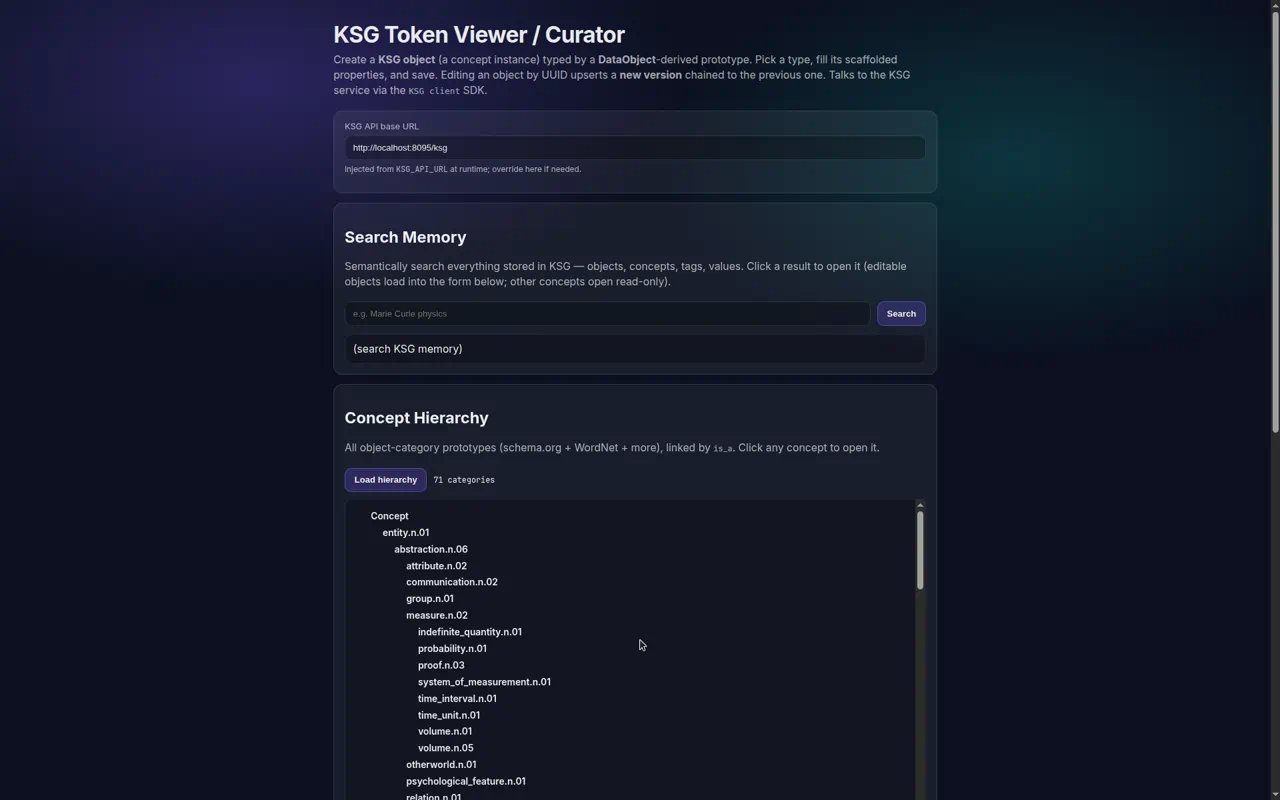 Concept hierarchy browser (schema.org + WordNet seed)
Prove memory yourself. Don’t just watch a video.
Sign up, then chat with OSLO. Your facts stay in private memory.
start hereTalk to the assistant. Teach → leave → return → recall.
needs accountSee the page OSLO is working on. Take over if a login wall appears.
browser viewBrowse KnowShowGo objects and prototypes in the seeded ontology.
memory UIKnowShowGo REST for your own apps: api.knowshowgo.com (/api, /api2.0).
Login-free product summary for humans or ChatGPT critique.
openRequest guided access if you want a walkthrough.
waitlist